Monies will fund unprecedented study of link between health and air pollution in Dallas Freedman’s Town; first effort of its kind in Texas
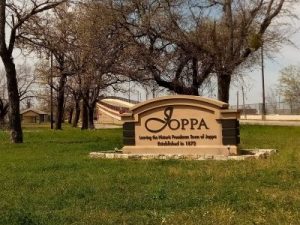
What’s believed to be the single largest environmental health research investment in a Texas neighborhood was awarded today by the Robert Wood Johnson Foundation to examine the links between human health and air pollution in the Joppa community of Dallas.
 Texas A&M and Downwinders at Risk’s Joppa Environmental Health Project was selected as one of only 16 national proposals funded by the Foundation’s Interdisciplinary Research Leaders grant. Between now and 2022, over $350,000 will be spent by Texas A&M scientists trying to understand the correlation between Particulate Matter air pollution and the health of the Freedman’s Town’s residents.
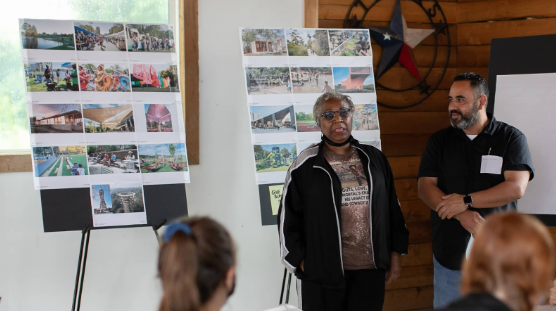
Cecilia Wagonner, a member of the Joppa church that hosted a community meeting on air pollution monitoring last December, was enthusiastic about the news. “I want to know the truth and nothing but the truth about air quality in our historic neighborhood. This is definitely good news. Let environmental justice be served.”
Per capita, Joppa is the most polluted neighborhood in Dallas. On one side is the Trinity River. On the other three sides are an asphalt batch plant, Railroad switch yard, large asphalt shingle factory, a concrete batch plant, and Interstate highway. It’s directly downwind from the largest methane air p olluter in Dallas – the City’s McCommas Landfill methane energy recovery unit.
Since PM air pollution monitoring began there on August 31st as part of the new SharedAirDFW air monitoring network, Joppa’s PM levels have averaged significantly higher than other sites.
Two Texas A&M scientists based in College Station will lead the new Project. Dr. Natalie Johnson, is an A&M toxicologist specializing in the health effects of Particulate Matter air pollution, and Dr. Ping Ma, is an A&M behavioral and social science researcher who previously worked at Dallas Children’s Hospital specializing in health disparities and social determiners of health. Downwinders will assist with community canvassing and outreach efforts as well as provide technical support through its 11-Joppa based SharedAirDFW network monitors.
They’re now all charged with collecting evidence to discover whether Joppa has higher rates of PM air pollution and health problems than other communities, and understand how differences in daily levels of PM affect residents’ health.
“PM represents a significant ‘unseen’ health risk related to cardiovascular disease, chronic respiratory disease, including lung cancer and asthma, as well as effects on infant development and brain health,” said Johnson. “SharedAirDFW’s real-time pollution monitors will help make this threat ‘seen.”
Ping pointed out the study will be the first academic-community collaboration of its type in Texas. “Our findings will facilitate understanding of the air pollution risks Joppa residents face as well as generate community-based solutions to help create a new culture of environmental health in Joppa.”
Participa nts chosen for the IRL process also become students who receive training in the latest research methods and constant feedback from panels of experienced scientists and experts.
Grant monies will pay for staff time, graduate assistants, technology, travel, and community outreach over a three-year period.

The IRL grant is the first research project attracted by the SharedAirDFW regional air monitoring network that debuted in September, but Jim Schermbeck, Director of Downwinders, predicted it wouldn’t be the last. “This network makes all kinds of new comparisons and studies possible. In this case, residents and researchers are using it to document Joppa’s air pollution burdens and assist residents in relieving those burdens. That’s a first for Dallas, and Texas.”
From now until the end of the year the Project partners will be assembling their local contacts, refining their timeline and methodology, and getting ready to begin research in early 2021.