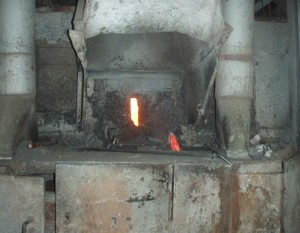
 We've linked to the sad and horrible stories coming from ex-employees of the Frisco Exide Lead smelter that paint a disturbing picture of what went on when the public and regulators weren't looking. But this is Texas, where you practially have to have dead bodies piled up along your fenceline to get the state to do much about polluters and their pollution. What might happen if Exide were to have a rogue smelter in less-polluter-hospitable place, like, say, California?
A battery recycling plant in Vernon is being told to reduce its emissions after recent tests showed it is posing a danger to as many as 110,000 people living in an area that extends from Boyle Heights to Maywood and Huntington Park.
The South Coast Air Quality Management District announced late Friday that Exide Technologies, one of the largest battery recyclers in the world, must also hold public meetings later this spring to inform residents that they face an increased cancer risk and outline steps being taken to reduce it.
Air district officials said Exide's most recent assessment showed a higher cancer risk affecting a larger number of residents than any other of the more than 450 regulated facilities in Southern California over the 25-year history of a program to monitor toxic air contaminants. The primary contaminant in this case was arsenic.
There has been "nothing close to this … never," said Sam Atwood, spokesman for the air district.In a statement, Exide officials said they planned to work with the district on emissions reductions "that we expect will meet or exceed" requirements. "Exide takes its environmental responsibilities seriously…."
Yes, so seriously, they've waited until they got caught to address these arsenic emissions. According to the most recent estimates, the company is posing a risk of 156 cancers per million population. The EPA standard is one in a million.
Under California's regulations, when cancer risk from a facility reaches 10 per million, public notification is required. When it hits 25, facilities must take steps to reduce their emissions. Exide was six times over that limit.
Since the 1987 Toxic Hot Spots program went into effect, only about 20 facilities in Southern California have ever reported risks that were greater than 25 in 1 million. More than 95% of the facilities the air district regulates have risks under 10 in 1 million.
California will force Exide to produce a "Risk Reduction Plan" within 6 months that will have to outline how the company will reduce its arsenic emissions. Failure to do so could result in $25,000 a day fines and a shut down order from a judge.
Meanwhile, Exide is doing everything possible in Frisco to make sure that city will have lead-waste landfills along Stewart Creek and near downtown forever – refusing to remove the hazardous waste that's been found in them in favor of "treating" it in place in town and saying it wants to "cap" all the dumps and landfills, even though many are on slopes and one is even partially in the flood plain.
Our bet is that Exide will choose to close its California smelter rather than install state-of-the-art controls, and then Frisco will have yet another community to commiserate with over the company's toxic leftovers.